Will Drone Arms Procurement Protect or Harm Taiwan?
China Times Opinion, June 28, 2026
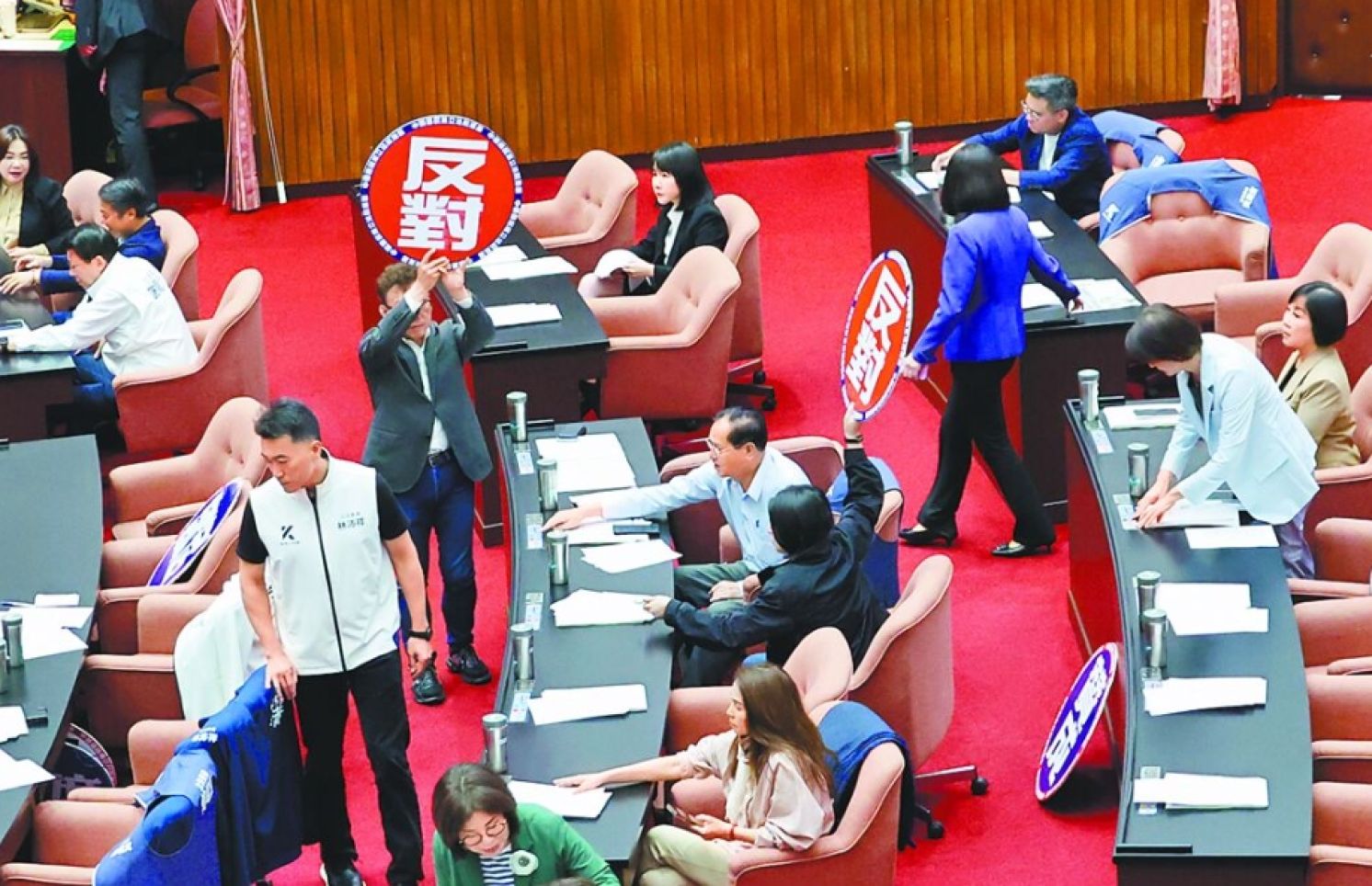
The drone procurement program has once again become a political focal point in Taiwan. The administration of President Lai Ching-te has proposed the draft Special Act for the Procurement of National Defense Autonomous Unmanned Vehicles. During his visit to the United States, Speaker Han Kuo-yu met with U.S. officials, and the drone budget also became a topic of concern. However, excessive political maneuvering risks oversimplifying the issue into a binary question of "supporting or opposing national defense," thereby eliminating the space for professional discussion, which is not truly in Taiwan's best interest.
National defense concerns national survival, but the NT$210 billion (about US$6.4 billion) requested by the Executive Yuan under the proposed special act is by no means a small sum. If inappropriate items are purchased, if essential capabilities are neglected while unnecessary equipment is acquired in large quantities, or if the procurement ultimately proves ineffective, then it would not merely be a waste of money but a major vulnerability in Taiwan's national defense.
This is not an exaggerated concern. The ruling party has accused the opposition of "not supporting national defense" for obstructing the drone special act, hoping to force it through. This tactic of pressuring the opposition into approving the budget has been used repeatedly, but the results have often been disappointing. Not only has the Hai Kun submarine program still failed to enter service after ten years, but many inexperienced contractors with no relevant track record have also been awarded contracts for defense weapons and equipment. Although these projects have passed inspection, whether they will actually perform effectively in combat remains a cause for concern.
There have been too many examples of the ruling party allowing politically connected allies to profit handsomely from procurement projects, creating widespread unease. Without strict oversight and anti-corruption mechanisms, allowing the executive branch to freely award contracts to politically connected allies could ultimately become something that leaves the People's Liberation Army (PLA) laughing all the way.
In recent years, the Control Yuan has become virtually ineffective, while prosecutors and investigators have likewise failed to act. Mainland China has arrested numerous senior military officers, including vice chairmen of the Central Military Commission, ministers of national defense, and commanders of military branches, with many ending up behind bars. What about Taiwan?
The drone procurement proposal has been introduced far too hastily, without sufficient professional discussion. The Ministry of National Defense has failed to provide a clear explanation, giving the impression that the proposal is merely responding to American demands. Equally troubling is the extent of American involvement in Taiwan's military procurement, which has already reached the tactical level of determining how wars should be fought. After all, it is Taiwan's armed forces that would be fighting the war. If everything is directed by U.S. advisers and the course of the war unfolds differently from what Washington anticipated, leaving drones and unmanned vessels unable to achieve their intended effectiveness, who would bear responsibility? American advisers could simply leave, but Taiwan's military would have to bear the consequences. Would the commanding generals truly accept that?
This concern is likewise not exaggerated. Drones have only emerged in recent years as a key weapon in "asymmetric warfare." Their development has been rapid, and their battlefield performance has been impressive. At the same time, however, counter-drone systems have also advanced quickly. The principal advantage of drones lies in attrition warfare. It is not that they cannot be intercepted; rather, using air defense systems costing millions of dollars to destroy weapons worth only a few thousand dollars is economically unsustainable over the long term. However, inexpensive counter-drone systems have already emerged, such as microwave and laser weapons, whose cost per shot is extremely low, making drones relatively expensive by comparison. During mainland China's military parade on September 3 last year, a laser counter-drone system was publicly displayed. Consequently, the large number of drones that Taiwan may hastily procure today could become ineffective in the future.
The author is not opposed to military drone procurement. Rather, the recommendation is that procurement should proceed only after professional evaluation of operational requirements and suitability, while also establishing oversight and anti-corruption mechanisms. It should not be rushed through under U.S. pressure. Otherwise, it would not be an act of supporting Taiwan, but one that could ultimately harm Taiwan.
The author is executive director of the Taiwan International Strategic Study Society.
From: https://www.chinatimes.com/opinion/20260628002404-262104?chdtv